
ReWorld – Proyecto Washu Partnership Protects Endangered Ecuadorian Monkeys
In Ecuador’s Chocó region, the highly endangered Ecuadorian spider monkey survives thanks in large part to the conservation work of Proyecto Washu. The collaboration with ReWorld will amplify the environmental impact and strengthen a project that has proven successful thanks to the inclusion of local communities since its beginnings.
Time is running out for the Ecuadorian spider monkeys. Less than 20% of Ecuador's original vegetation remains in the coastal region, and in the province of Manabí, fewer than 300 of these monkeys survive in isolated forest "islands" created by deforestation. Without intervention, this species, which is one of the 25 most endangered primates in the world, could vanish within a generation.
Conservation Meets Community
When primatologists Felipe Alfonso-Cortes and Nathalia Fuentes arrived in the province of Esmeraldas, in northern Ecuador, to conduct a study on a highly endangered primate that was little known, the Ecuadorian spider monkey, they experienced what could be called beginner’s luck.
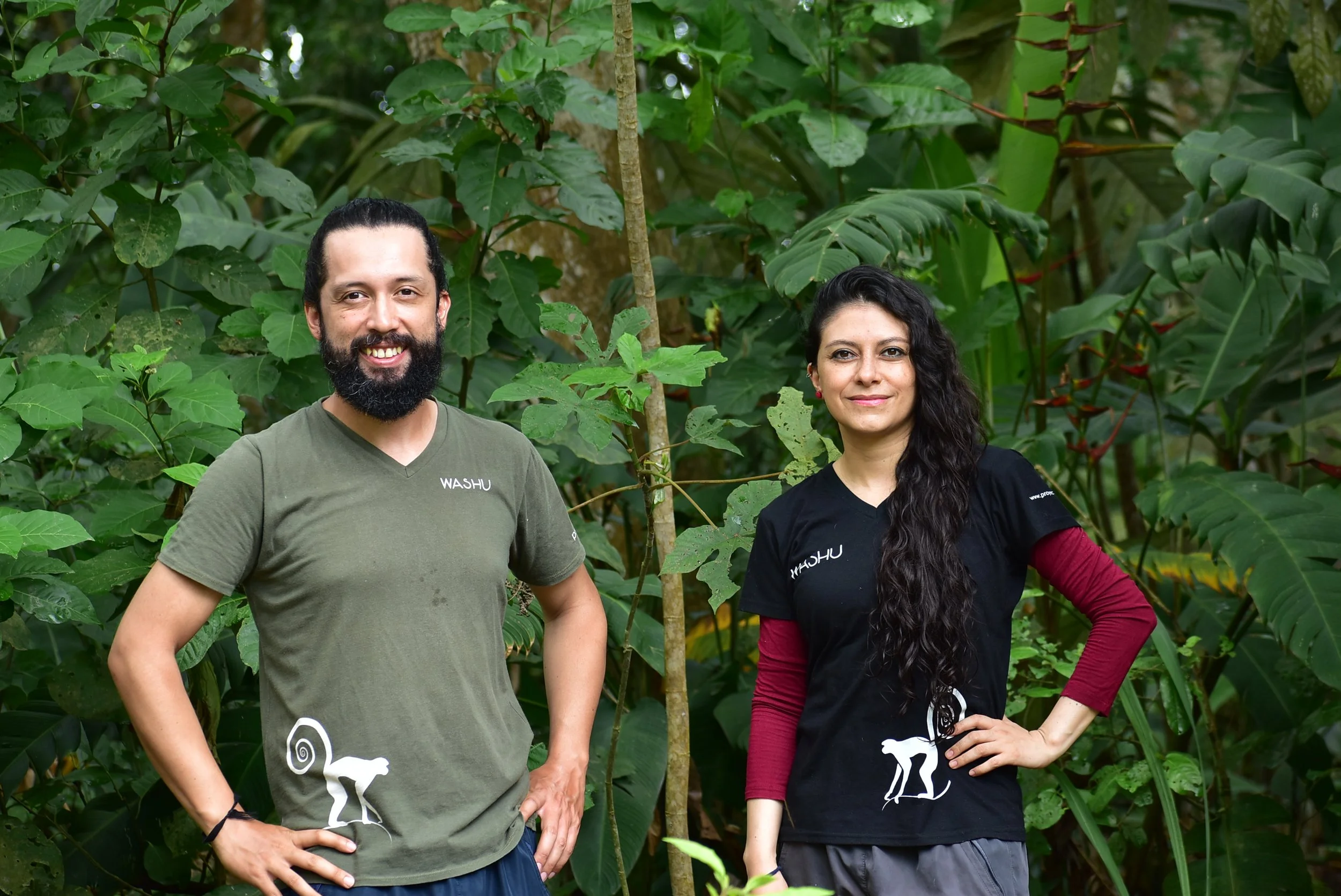
Proyecto Washu co-founders Felipe Alfonso-Coretes and Nathalia Fuentes
Although deforestation is widespread across Ecuador’s coastal region, the Tesoro Escondido area offered something different. Skilled farming families there had been cultivating Ecuadorian fine-aroma cocoa for two decades. This variety is highly sought after worldwide for its quality and aroma. These farmers were willing to collaborate to stop deforestation in exchange for an improved standard of living.
Little by little, through mutual understanding and trust-building, the biologists helped the farmers improve their skills in cocoa fermentation and post-harvest processing, while connecting them to direct buyers who recognized the added value of products linked to forest conservation. In turn, the families stopped cutting down trees to plant more cocoa and became active forest stewards.
“It’s been a sharing of knowledge from them to us and from us to them, and that process has been incredibly enriching,” says Nathalia.
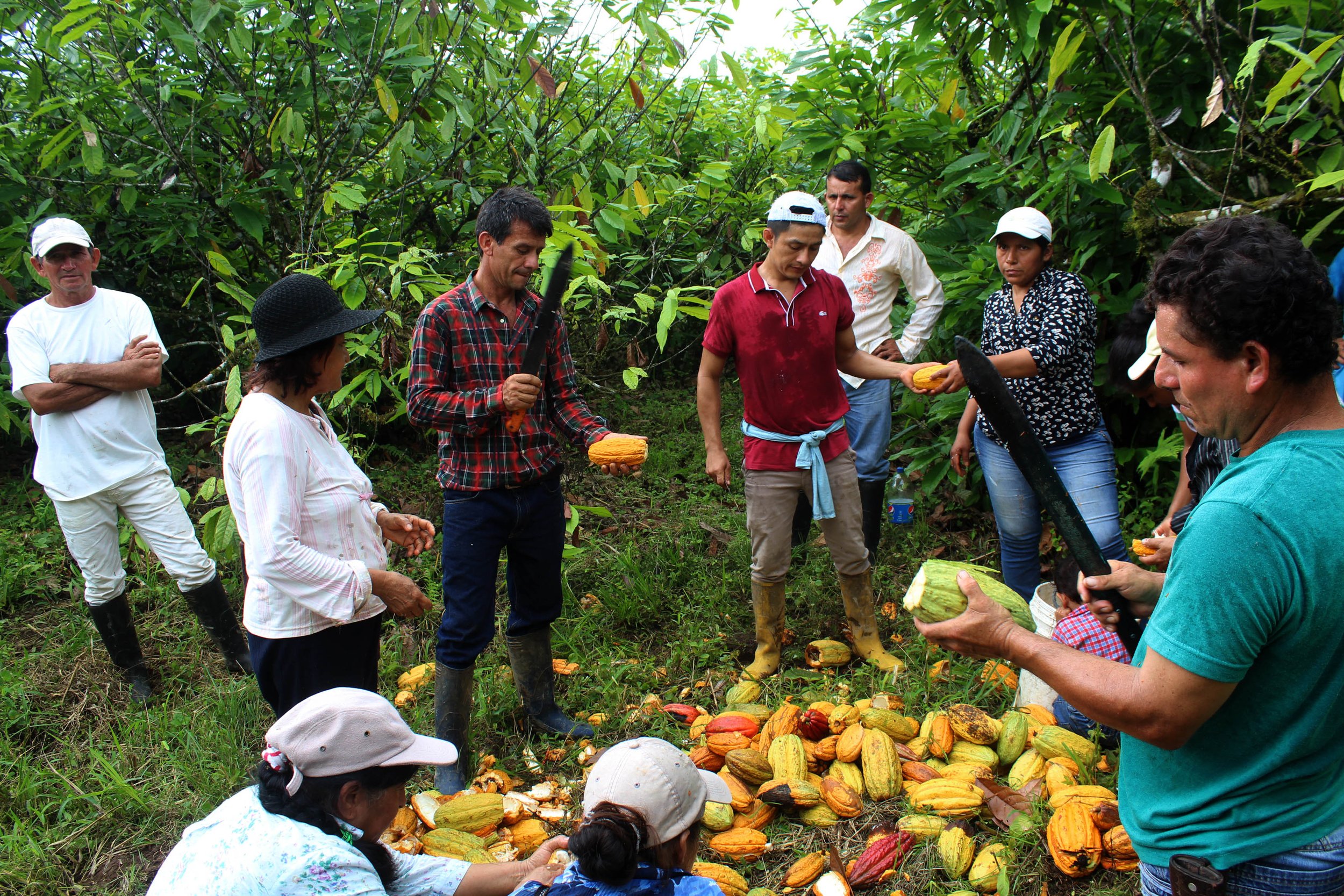
Cocoa farmers in Tesoro Escondido are a vital part of forest conservation
This is how, in 2012, the conservation NGO Proyecto Washu was founded — its name inspired by the Indigenous Chachi people of coastal Ecuador, who call the spider monkey washu. The organization, a member of the Wildlife Conservation Network (WCN), was created to protect the species Ateles fusciceps, which has been part of the 25 most endangered primates in the world.
The species' vulnerability is compounded by its biology. Females have their first offspring between 7 and 9 years of age and then give birth to one every three years. The mother nurses her young for up to three years, but the offspring remain with her until around six years old. This slow reproductive cycle, combined with deforestation and hunting, means populations of this long-limbed, prehensile-tailed primate can decline very rapidly.
The Ecuadorian spider monkey is a key ally in forest regeneration, as after spending several hours a day eating fruit, it can travel up to 3.7 miles a day and disperse as many as 320 seeds. Some of the seeds are even swallowed whole, without being chewed, so they pass through the animals’ intestines intact, which allows them to germinate more quickly.
An Astonishing Discovery
The story could have ended there as a success story, but it got even better. In the province of Manabí, a bit further south, where the species was thought to be extinct, researchers discovered nearly a decade ago that Ecuadorian spider monkeys were still surviving. Deforestation had created isolated “islands” of fragile biodiversity, trapping the monkeys in small forest patches that were no longer connected to each other.
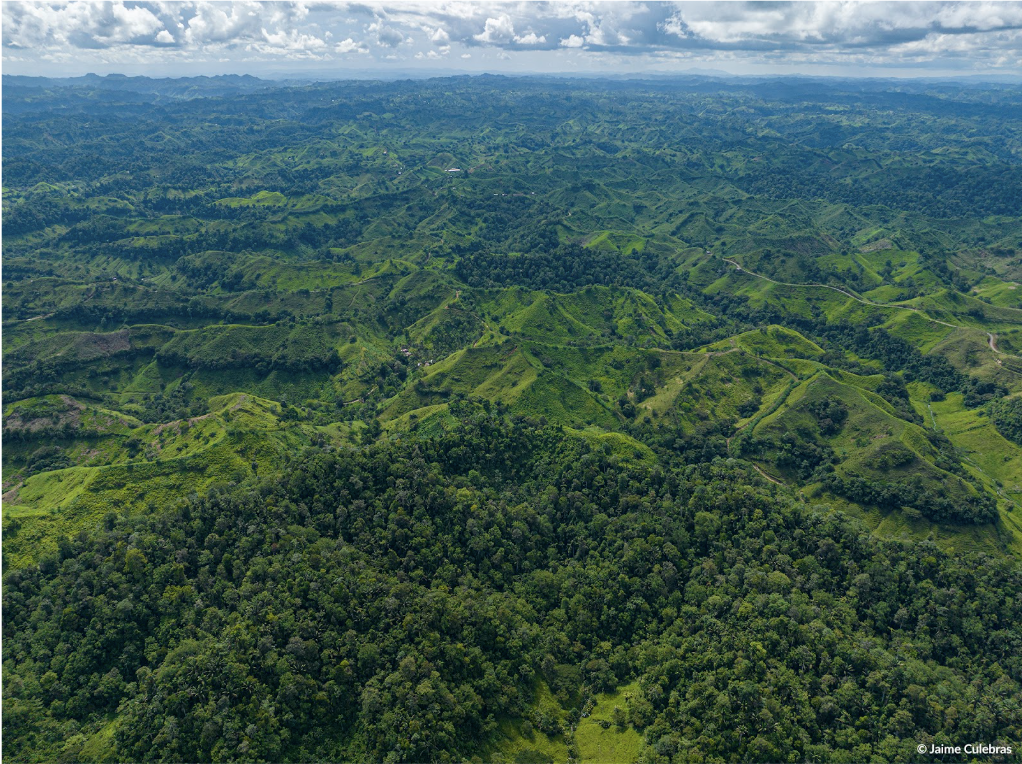
Forested terrain of Manabí province
It was there that the adventure of these two primatologists truly took a turn. They had to unlearn much of what they had been taught at university and adapt to a highly threatened ecosystem that held a precious treasure: the Ecuadorian spider monkey.
Felipe and Nathalia had built something remarkable: a conservation model that works. But scaling it to save these isolated populations would require new capacity.
Scaling Success Through Partnership
Enter ReWorld. Following its successful collaboration with Proyecto Tití, which helped secure over $1M to purchase 956 acres in Colombia to restore habitat for endangered cotton-top tamarins, ReWorld is now partnering with Proyecto Washu.
Through their partnership, ReWorld will provide funding strategies, technological tools, and strategic support to help this critically endangered species withstand threats such as deforestation, urban expansion, and mining.
Project Combines Social Justice, Cultural, and Environmental Heritage
Building on lessons from the Esmeraldas region, Felipe and Nathalia knew that success in Manabí would depend on involving local communities from the very beginning. These were communities whose livelihoods were more livestock-based and less agricultural than those in the north of the country.
“No one thought that a species like the spider monkey could still exist in these forest fragments, so the area was kind of forgotten by research and conservation NGOs. It was only through a university study, using camera traps, that it was rediscovered,” says Felipe.
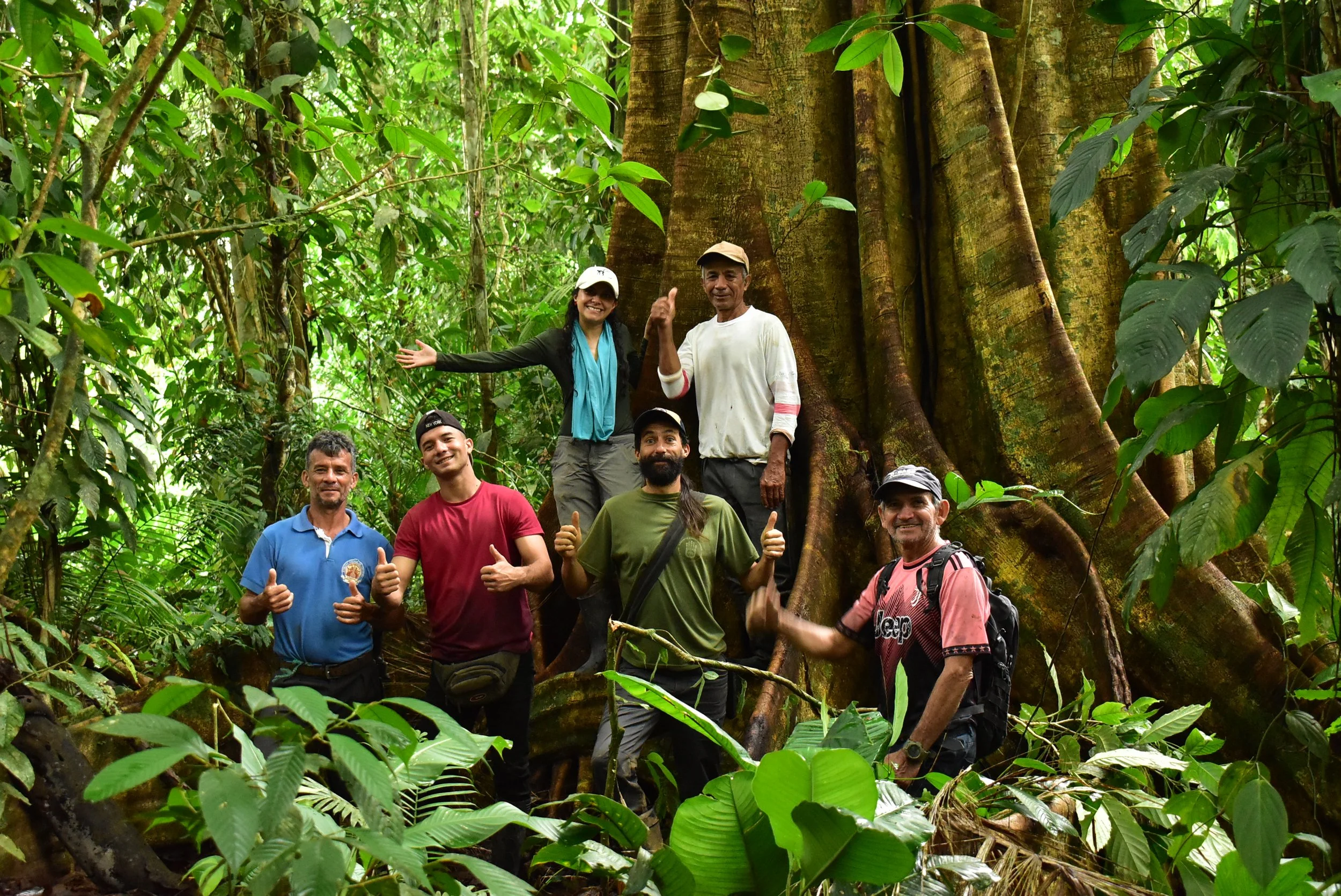
Proyecto Washu team members
In this case, the strategy adopted was different; more focused on purchasing land to create a private nature reserve, yet without excluding the local community that lives within it.
“That’s why we’re now trying to learn about cattle ranching to understand their needs better and find ways to work together,” explains Nathalia.
In late 2025, with support from a Wildlife Conservation Network fund, the Washu team reached a major milestone: acquiring 576 additional acres, bringing the total to 1,071 acres and adding an important addition to the private reserve dedicated to protecting the spider monkey.
Enhanced Fundraising Capacity and Digital Infrastructure
To maintain protection in these areas and continue connecting lands to create a true biological corridor, Proyecto Washu needs to scale its conservation model. This means enhancing fundraising capacity and digital infrastructure.
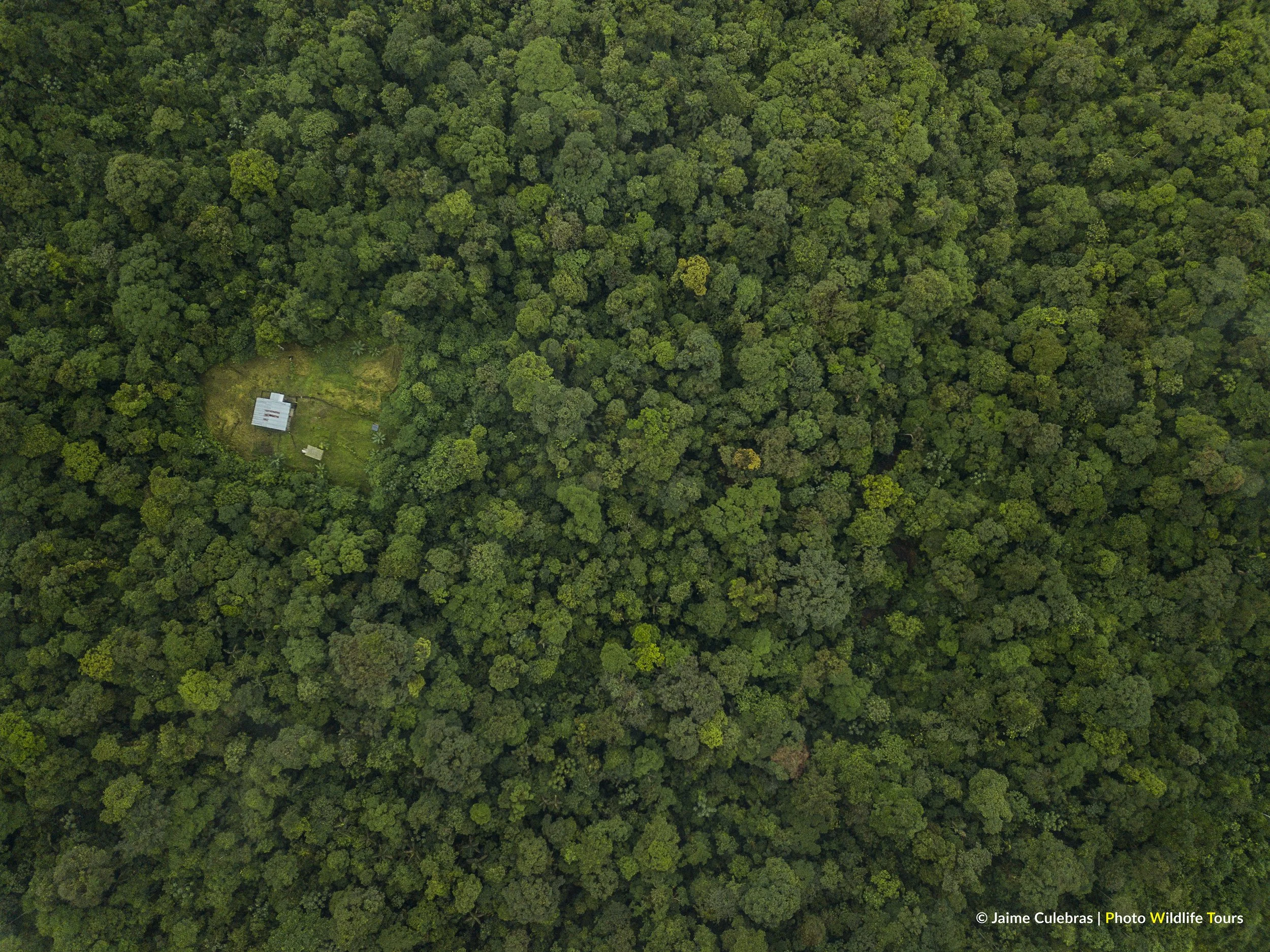
Farmers territory in the Esmereldas
Through a combination of initiatives, ReWorld joins this project to contribute its expertise, including interactive donor mapping and website optimization, brand storytelling, and AI-powered fundraising tools.
Proyecto Washu has developed a strong strategy built around five core programs that address both ecological and social needs:
Scientific research, which ensures constant monitoring of the areas where the spider monkey lives
Community-led development, helping local communities market their products more effectively and improve their quality of life
Protected areas & reforestation
Environmental education that guarantees a generational handover in the protection of both the region and the environment
Ex-situ conservation, which includes the creation of a monkey rehabilitation station in the north, in the Esmeraldas region. There, monkeys rescued from wildlife trafficking and those unable to return to the wild will be able to live safely in enclosed natural spaces.
To achieve all this, funding is essential: to purchase new land, complete the rehabilitation center, and pay the salaries of forest guardians. It’s also needed for practical necessities, such as a 4x4 vehicle, so that the team can move between sites and transport spider monkeys for emergency medical care.
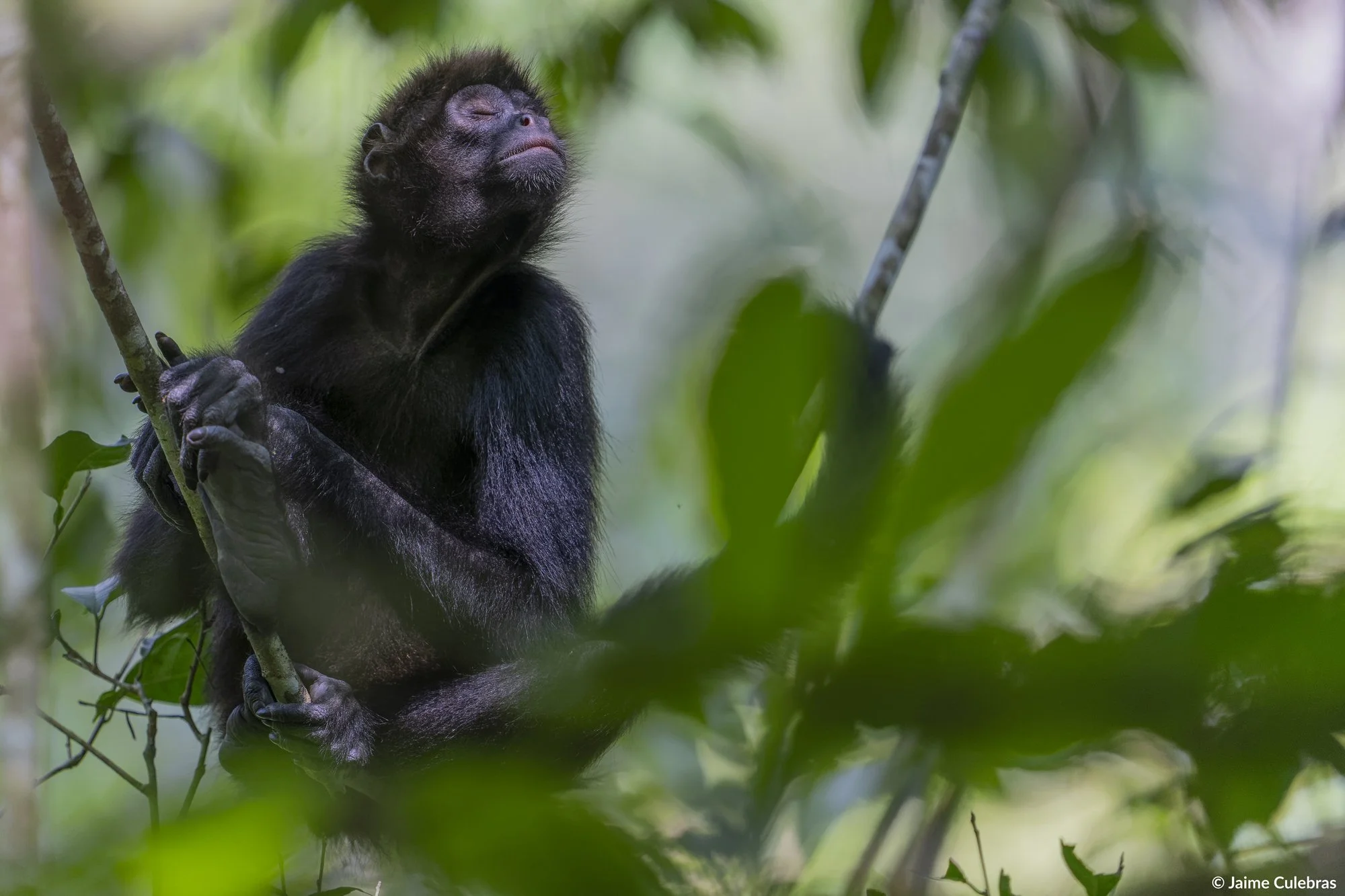
An endangered Ecuadorian spider monkey protected in Reserva Manabí
As is often the case in Latin American conservation projects, grassroots environmental organizations face their biggest challenge in accessing conservation funding. ReWorld’s mission is to amplify their voices to ensure their continuity and success.
For Felipe and Nathalia, what began as a research project has become a lifelong commitment to saving the Ecuadorian spider monkey. Through the partnership between Proyecto Washu and ReWorld, their proven model can now reach the scale needed to create true biological corridors, giving the critically endangered Ecuadorian spider monkeys a fighting chance at survival.